Building Strong Bones for Life: Nutrition, Movement, and Targeted Support for Bone Health
What Is Bone Mineral Density (BMD)?
Exercise for Bone Strength
Bone Health Diet
Support Tissue Health with Collagen
Introduction
Bone health is not just about calcium, and it's not something that suddenly matters when osteoporosis appears on a DEXA (bone density) scan. Bone is living tissue, constantly responding to nutrition, movement, hormones, stress, digestion, and inflammation. When those signals are supportive, bone strengthens. When they are not, bone density declines.
At Optimal Health Network, I work with individuals at every stage of life, especially those concerned about bone health for seniors, osteoporosis, joint pain, or declining bone mineral density. What I see again and again is this: when the body is given the right signals, bone responds.
Bone Mineral Density and the Living Nature of Bone
Bone mineral density (BMD) is the most commonly measured indicator of bone mass and fracture risk. Research consistently shows that BMD is influenced not only by age, but by diet, physical activity, stress levels, smoking status, and hormonal balance. Studies also show a strong relationship between optimal vitamin D levels and reduced fracture risk, especially in older adults.
▶︎ Buy Ortho Liquid Vitamin D3 with K2
Bone is continually renewed through a lifelong process called bone remodeling:
- Osteoclasts break down old or weakened bone
- Osteoblasts build new bone on a collagen-rich protein matrix that later becomes mineralized
Healthy bones depend on balance. When breakdown exceeds rebuilding, bone density declines. This imbalance becomes more common with aging, chronic stress, inflammation, nutrient deficiencies, and hormonal shifts.

Exercise for Bone Health: Movement as a Signal to Build Bone
Exercise is one of the strongest signals the body receives to maintain bone strength.
Research consistently shows that weight-bearing exercises for bone health and resistance training help preserve or improve bone mineral density, particularly in postmenopausal women and older adults.
Helpful forms of movement include:
- weight-bearing exercise such as walking, hiking, stair climbing, and dancing
- resistance training using weights, bands, or body weight
- yoga for bone health, which improves balance, posture, flexibility, and joint integrity while gently loading bones
Even moderate, consistent movement has been shown to positively influence bone density and reduce fracture risk over time.
Collagen, Protein, and the Bone Matrix
Bones are not just mineral. Up to one-third of bone mass is made of collagen, the protein framework that gives bone flexibility and tensile strength. Research shows that collagen quality is a major determinant of bone strength and fracture resistance.
Adequate protein intake and nutrients that support collagen synthesis, such as vitamin C, magnesium, vitamin K, and B-complex vitamins, are essential. This is why vitamins for joint and bone health must be addressed together, not separately.

Dietary Foundation: Ten Days to Optimal Health
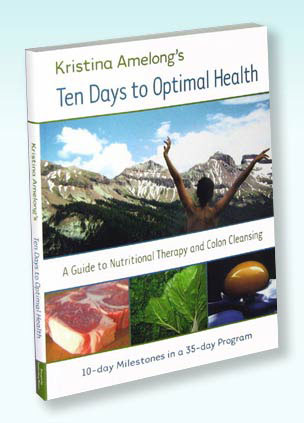
All effective bone-building protocols rest on a solid nutritional and digestive foundation. For this reason, I use my book — Ten Days to Optimal Health: A Guide to Nutritional Therapy and Colon Cleansing — as the core dietary protocol.
This step-by-step guide to nutritional therapy is an easy-to-follow, home-based program that draws on the nutritional research of Dr. Weston A. Price, who studied traditional societies and found that strong bones, perfect teeth, and resilient health were built on nutrient-dense traditional foods, not modern processed diets.
When digestion and elimination improve, nutrient absorption improves. This matters deeply for bone health, because minerals such as calcium, magnesium, strontium, and trace elements cannot be properly utilized if the gut is compromised.
▶︎ Buy Book: Ten Days to Optimal Health
Targeted Nutritional Support for Bone Health
To complement diet and movement, I recommend Ortho Molecular's Pro Bono®, a targeted, multi-faceted bone-building protocol.
Pro Bono provides the nutritional support needed to maintain healthy bone formation by delivering clinically studied nutrients in bioavailable forms, thoughtfully separated for optimal absorption. By providing a full complement of foundational micronutrients, it makes an additional multivitamin unnecessary.

Pro Bono is designed to:
- increase skeletal strength
- promote healthy bone density
- support bone remodeling
- maintain a healthy balance between osteoclasts and osteoblasts
The Role of Strontium in Bone Health
The foundation of Pro Bono is strontium, one of the most well-researched bone-supporting minerals.
Research shows that strontium:
- increases osteoblast (bone-building) activity
- decreases osteoclast (bone-breaking) activity
- enhances collagen matrix formation
- supports bone mineral density in the spine, hip, and femoral neck
Clinical studies such as the COMB and MOTS trials demonstrated improved bone mineral density and bone strength in postmenopausal women using strontium citrate in combination with other key nutrients, without adverse outcomes.
Key Bone-Building Nutrients in Pro Bono
Each serving of Pro Bono provides bioavailable forms of:
- strontium
- calcium (citrate malate and hydroxyapatite forms are shown to absorb better than carbonate)
- magnesium (essential for calcium metabolism and vitamin D activation)
- vitamin D3 (correlated with improved bone mineral density)
- vitamin K1 and K2 (MK-7) (guides calcium into bone and away from soft tissue)
- boron (supports mineral retention and hormonal balance)
- trace minerals and B-complex vitamins (required for bone remodeling)
▶︎ Buy Pro Bono
Collagen Beyond Bone: Supporting the Entire Connective Tissue System
Bones do not exist in isolation. They are part of a living connective tissue network that includes cartilage, tendons, ligaments, fascia, and skin. All of these tissues rely on healthy collagen synthesis to remain strong, flexible, and resilient.
Over time, stress, inflammation, nutrient depletion, repetitive motion, and aging reduce connective tissue elasticity. This can show up as joint stiffness, discomfort, slower recovery, or reduced mobility, even when bone density appears stable.
For this reason, I often include a targeted collagen supplement alongside bone-building protocols.

Targeted Collagen Support: Ortho CollaGEN®
Ortho CollaGEN is formulated to nutritionally support cartilage, tendons, ligaments, fascia, and skin using clinically studied collagen peptides that stimulate the body’s own collagen production.
Ortho CollaGEN supports:
- connective tissue biosynthesis and repair
- cartilage, tendon, ligament, and fascia self-repair
- joint lubrication and cushioning
- a healthy connective tissue inflammatory response
- rejuvenation of healthy hair, skin, and nails
The patented ingredients FORTIGEL®, Tendoactive®, and Mobilee® have been shown in human studies to stimulate type II collagen and aggrecan production, supporting cartilage resilience, intervertebral discs, and fascial integrity.
Unlike approaches that simply block pain, targeted collagen peptides work with the body’s natural repair processes, preserving tissue structure over time.
▶︎ Buy Ortho CollaGEN
Bone Health for Seniors and Osteoporosis Support
Bone health for seniors requires addressing nutrition, movement, digestion, stress, and targeted supplementation together. Osteoporosis is not simply a calcium deficiency. It is often the result of years of imbalanced bone remodeling.
When supported properly, research shows that bone density can stabilize and, in some cases, improve, especially when vitamin D status, mineral balance, collagen support, and physical activity are optimized.

How I Often Combine These Tools in Practice
For individuals focused on:
- bone health for seniors
- osteoporosis bone health
- joint stiffness or discomfort
- long-term mobility and fracture prevention
I often layer:
This integrated approach supports not only stronger bones, but greater ease of movement, improved posture, and long-term resilience.
A Living System Worth Supporting
Bones respond to care. They respond to nourishment, rhythm, movement, and consistency. When we combine weight-bearing exercise, yoga, collagen-supportive nutrition, stress reduction, and comprehensive supplementation, we give the body the support it needs to rebuild strength from the inside out.
Whether your goal is osteoporosis bone health, joint longevity, or staying strong and active as you age, a grounded, whole-body approach makes all the difference.
▶︎ Ten Days to Optimal Health: Learn More
DISCLAIMER: The material on this page presented for informational purposes only and is not a substitute for medical advice, diagnosis, or prescribing from a licensed healthcare professional. Consult with your doctor before altering or discontinuing any current medications, treatment, or care, or starting any diet, exercise, cleansing, or supplementation program, or if you have or suspect you might have a health condition that requires medical attention.
By Kristina Amelong, CCT, CNC
I-ACT-Certified Colon Hydrotherapist
Certified Nutritional Consultant