How To Do a Coffee Enema: Recipe & Instructions
Everything you need to know to conduct coffee enemas at home
JUMP TO PRODUCTS
Client Testimonial
"I am on the Gerson Therapy and have to do 5 coffee enemas a day. I was having a hard time before I saw your informational videos on YouTube. I got your Super Salve and performed my first enema of the day as part of a sequence of 3, which makes it much, much easier. I am now so comfortable and calm that I nap peacefully during some of the enemas. Thank you very much. I will be getting more enema equipment and Super Salve from you in the future. Thank you, thank you, thank you." ~ Chrys P.
Need an effective alternative to the coffee enema? The Coffee Enema and Geranium Essential Oil
KRAIG'S COFFEE ENEMA PROTOCOL
DISCLAIMER: This article is authored by a patient, Kraig, in collaboration with Kristina Amelong, CCT, CNC, of the Optimal Health Network. This article is for informational purposes only and is not a substitute for medical advice, diagnosis, or prescribing from a licensed healthcare professional. Consult with a licensed healthcare professional before altering or discontinuing any current medications, treatment, or care, or starting any diet, exercise, cleansing, or supplementation program, or if you have or suspect you might have a health condition that requires medical attention.
Required Items Core Procedure Helpful Information What Does a Coffee Enema Do?
There seem to be as many different claims for how to do a coffee enema properly as there are petals on a daisy. The subject of which way is "right" arouses strong opinions — I've even read of coffee enema advocates at a health conference almost coming to blows over whether the enema is to be taken while lying on the right side or the left side. All of this can be confusing to the patient.
Though not a common practice today, coffee enemas do have a long history of use. Recorded medical use of coffee enemas dates back to 1917; their beneficial effects on the liver were claimed by German scientists in the 1920s; they appeared in all major nursing textbooks through the 1950s; and they were listed in the Merck Medical Manual until the mid-1970s.
A study published in 1995 evaluates the efficacy of the Gerson therapy for treating cancer, and found that this treatment, which focuses on nutrition and coffee enemas, yielded significantly higher 5-year survival rates in melanoma patients than the rates reported elsewhere with conventional treatment.
The health benefits of coffee enemas that I've experienced include aiding my healing immensely (from diagnoses of Lyme disease, multiple chemical sensitivities, and heavy metal toxicity). I have yet to experience a toxicity-related reaction that I couldn't stop or tremendously reduce with a coffee enema. Having experimented with a variety of protocols, drawing on techniques and insights from multiple sources, I've put together a coffee enema recipe that works for me. You will also need to experiment to see what's best for you. My goal in sharing this protocol is to help you get to what works for you much faster. To get the most out of these coffee enema instructions, read everything completely before beginning.
Required Items for Preparing a Coffee Enema at Home
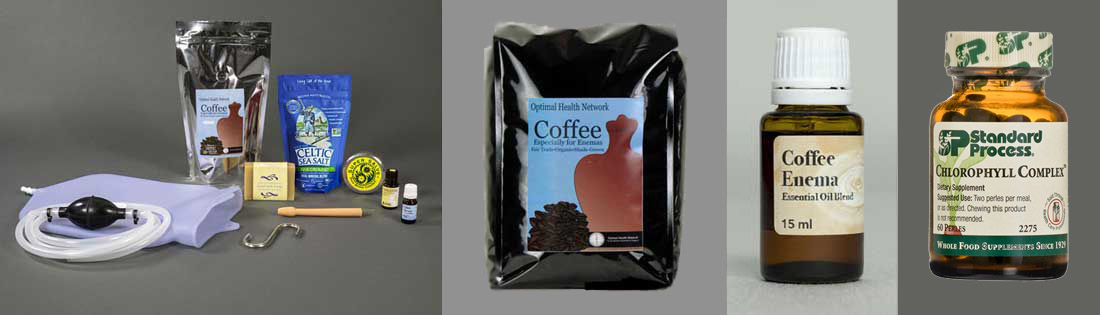
- Freshly ground, organic, light-roast, caffeinated coffee for enemas
- Celtic Sea Salt
- Chlorophyll (capsules, perles, or liquid)
- Tangerine essential oil
- A coffee maker
- Pyrex measuring cups: two-quart and two-cup
- Gold mesh or ultrafine stainless steel strainer or brown paper filters
- Enema bag or bucket with nozzled hose or with a silicone colon tube
- Clean, nontoxic, non-petroleum-based lubricant such as organic coconut oil, ghee, aloe vera gel, or Super Salve
- Timer or watch
- Stainless steel pitcher
- Clean towels, rags, and/or paper towels
Before the Coffee Enema
Absolutely clear out your colon with an enema series before you implant the coffee enema. In the first enema in the series, use a therapeutic soap. In the second enema in the series, use a teaspoon of Celtic Sea Salt per quart of filtered water to support a healthy electrolyte balance and use an essential oil blend such as OHN Colon Cleanse Essential Oil Blend to neutralize toxins, feed healthy colonic flora, reduce bacterial, fungal and viral infections, and support the colonic mucosa.
How to Colon Cleanse: The Enema Series
Kristina Amelong, CCT, CNC, describes the enema series for optimal colon cleansing.
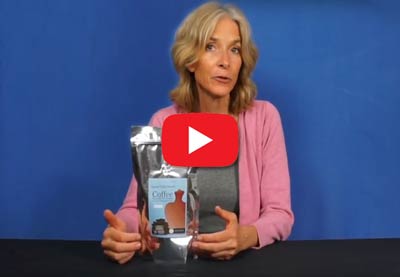
Coffee Enema Recipe and Instructions
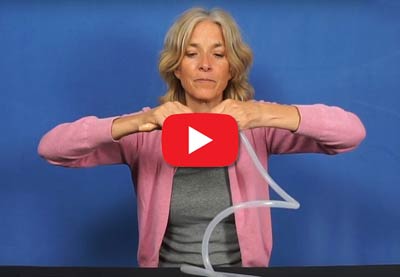
Kristina Amelong, CCT, CNC discusses the benefits of therapeutic coffee enemas, outlines the equipment you will need, and provides you with step-by-step instructions and recipes. She answers questions including "what's the best type of coffee to use?", "how does chlorophyll make a coffee enema more effective?", and "how often should I do coffee enemas?"
How To Take a Coffee Enema
Dee Dee Delkamp, CCT, CNC, of the Optimal Health Center describes the benefits of coffee enemas and gives step-by-step instructions for taking a coffee enema on your own at home.
LEARN MORE:
Coffee Enema Detox Recipes
Core Procedure | Using a Coffee Enema Kit at Home
TO TAKE THE COFFEE ENEMA:
- Bring 1-2 cups of purified water to a boil. Once boiling, turn off burner and stir in up to three tablespoons of finely ground organic coffee. (If you are caffeine sensitive, you may want to start with as little as 1 teaspoon of coffee per cup of water and increase the amount slowly over time). Steep for 10-20 minutes. Strain, and add enough cool water to equal 2-4 cups (1/2-1 quart). Alternatively, you can make your enema coffee in a regular coffee maker with brown paper filters.
- Take 4-8 chlorophyll perles or capsules or 4-8 teaspoons of liquid chlorophyll timed to precede the start of the enema by about 30 minutes.
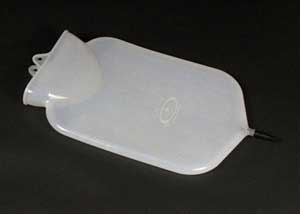
- While the coffee for the enema is steeping, make a comfortable place to lie down near a toilet and cover it with a designated coffee enema towel. (The towel will get coffee-stained.). My wife uses a yoga mat with a space blanket over it, and a towel on top of that. Hang your enema bag so the top is about waist high and close the clamp on the hose so it won't leak when filled. Set a small amount of nontoxic lubricant nearby, as well as a small timer set for 12-15 minutes, or a watch.
- Pour the coffee through a gold mesh filter or ultra-fine stainless steel kitchen strainer into a two-quart measuring cup.
- Pour 1 1/2 to 1 2/3 cups of the coffee solution into a spouted two-cup Pyrex container or small stainless steel pitcher and place it in a pan or sink of cold water. Allow the coffee to cool to just slightly over body temperature, so it is slightly warm to the touch. Never put hot coffee in your colon. Check it frequently to make sure it doesn't cool too much. Using a stainless steel pitcher will cool it more rapidly. Leave the rest of the coffee sitting in the two-quart Pyrex measuring cup, covered with a small plate if needed to prevent too much heat loss.
- Tangerine essential oil added to the coffee enema solution enhances the absorption of the coffee through the colon and into the circulatory system, assists the liver to process the coffee more efficiently and will balance the strong purgative effects of the coffee with its regenerative healing properties. Tangerine oil also helps the body to produce glutathione, which aids in detoxification of the liver. Tangerine oil is a fabulous decongestant for the lymph system and one of the strongest anti-tumor oils. Add 3-10 drops of tangerine oil to your coffee solution.
- Double check the clamp on the hose to make sure it is closed, then pour the cooled (roughly body temperature) coffee solution into the enema bag.
- Lubricate the end of the hose or nozzle as well as your anus, with lubricant.
- Holding the end of the hose slightly higher than the coffee in the enema bag, open the clamp just enough to purge air from the hose and allow coffee to fill the hose almost to its end. Pulsed squeezing of the hose will force trapped air pockets out. Close the hose clamp.
- Lie down on your left side, pull your knees up, and gently insert the nozzled enema hose or colon tube 4 to 6 inches into your colon, being very careful not to injure the colon wall or tissues. If you are using a detachable nozzle, do not insert it beyond the end of its stem. Whenever you feel any resistance, stop, pull back slightly, reposition the tube a little (change the angle), and continue. Sometimes allowing a little coffee to flow in will help with the tube insertion. If you can only comfortably get the tube in a couple of inches, leave it at that. Never force anything. Special attachable nozzles with rounded, bulb-like ends on a four-inch stem pretty much dictate a safe insertion. A wider (#32 or so) silicone colon tube is also very safe.
- Allow the coffee to flow in slowly, using the clamp or squeezing the hose with your fingers to regulate it. If you feel uncomfortable pressure build up in your colon, close the hose clamp or squeeze the hose shut and allow the pressure to subside, then begin again at a slower inflow rate. Only put in what your colon will comfortably hold.
- Once the enema coffee is in your colon, and start your timer.
- Once you have held the coffee in for 12-15 minutes, proceed to the toilet and release the enema. Stay on the toilet as long as necessary to allow a complete evacuation. A toilet stool, such as the Welles Step, that raises your knees toward your chest can be helpful, as can momentarily standing up and sitting down again. Do not push to achieve evacuation. Relax instead.
Helpful Information
SELECTING AND MAKING THE COFFEE
Most made-for-enema coffee or "coffee enema coffee" is lightly roasted in a manner that maximizes caffeine and palmitic acid content, key elements for stimulating detoxification. With these coffees you may feel and/or hear the release of bile from your gallbladder. Whichever type of coffee bean you choose, always go for the lightest possible roast. The darker the roast, the lower the caffeine and other key elements, and the less therapeutic the enema.
Always buy organic made-for-enema coffee.
1-3 tablespoons of coffee per quart of water is a good rule of thumb for brewing most coffees for enema use. Experiment to find your best dose.
Never use aluminum or iron pots or kettles to make the coffee. They can leach unwanted metals into coffee. The more you can stick with glass for the coffee-making process, the better.
A time saver is to make the coffee double strength — 4 tablespoons of coffee per 1/2 quart of water, for example — and then dilute the steeped, hot coffee with 1/2 quart of cold filtered water to quickly get 1 quart of slightly warm coffee solution.
Pouring the coffee enema coffee back and forth between containers is a good way to cool it slightly once you are close to the desired temperature.
TOXIN BINDERS
Chlorophyll binds toxins tightly. Once coffee stimulates your gallbladder to contract and release toxin-laden bile into the small intestine, it is vital to deliver something where the bile duct enters the intestine to bind the toxins so tightly they will not be reabsorbed through the intestinal wall. If you take coffee enemas, always use a binder.
ENEMA EQUIPMENT AND INSERTION
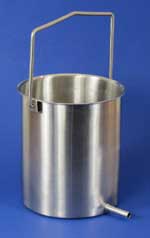
Stainless steel enema buckets and silicone enema bags with silicone hosing are the least toxic set-ups to use and worth the extra money. They will minimize the leaching of toxins into the enema coffee. Latex and soft plastic (vinyl and otherwise) enema bags are not recommended. Disposable plastic enema kits are not recommended for this reason and due to their environmental impact, except perhaps occasionally while traveling and pressed for time. Whatever material you use for a container, minimize the time the coffee sits in it to minimize leaching of toxins into the coffee.
Some enema bags come with a hose that is rounded off on the end with side holes that can be inserted into your colon. This serves as a nozzle. Other set-ups require that a nozzle or colon tube be installed on the end of the hose. Never insert the cut-off end of a hose into your colon.
The enema protocol described here is NOT a high enema, where you are trying to get fluids high into your colon, so you do not need the water pressure that comes from hanging the bag up high. You only want the coffee to settle in the sigmoid area of the lower colon where it will be absorbed into the blood circulating directly to your liver.
Some coffee enema protocols recommend inserting a colon tube 12 to 18 inches into the colon. I find trying to work a tube this far into the colon is tricky, unnecessary, and possibly counterproductive. The further you work a tube into your colon, the greater the chances of injuring the colon wall or creating some sort of negative reaction to the tube's plastic or latex material (silicone should be safe). As long as the lower colon has been cleared via a bowel movement or preliminary plain water enema, the coffee will get to where it needs to be with a tube/nozzle insertion of about 4 inches (or perhaps a little more depending on your body shape and size). That's all it takes. Finally, as someone who is caffeine sensitive, I find that if coffee gets beyond the sigmoid area (easy to do with deep insertion of a colon tube), the caffeine gets into my general blood circulation and I get a buzz as if I had drunk coffee — not good. This rarely happens if the caffeine stays in circulation to the liver only — i.e., the coffee stays in the sigmoid area.
HOLDING THE ENEMA
The more you do coffee enemas at home, the easier it gets to hold the enema for 12 or more minutes, especially if you put the coffee in slowly. If you get periodic peristaltic contractions of the colon, continue holding the enema through the contraction if you can do so comfortably. If you feel significantly strained, or feel any form of pain, go to the toilet, allow the enema to be expelled and start again. Early in my use of coffee enemas I found that doing a quick plain water enema (1 to 2 cups of lukewarm water and perhaps a few drops of coconut oil soap) to clear the lower colon would allow me to hold the coffee enema much longer while remaining relaxed and comfortable. Also, in the coffee enema sequence described here, the first coffee enema of 1 1/2 to 1 2/3 cups will substantially clear the lower colon so that the second 2+-cup enema can usually be held at least 15 minutes in comfort. Coffee that is cooler than body temperature is harder to hold and often initiates peristalsis.
If you need to save time, you can substitute a plain water enema for the first coffee enema, evacuating soon after the water is in your colon. Then, hold the second coffee enema 15 to 20 minutes.
Coffee enemas can be done daily for up to 7 days a week depending on the patient's situation. I've used them for almost two years, sometimes doing 5 or 6 a week during periods of greater toxicity or along with heavy metal chelation protocols. Some doctors advocate using them almost daily for up to two years, and then as needed afterwards, while others advocate almost daily use indefinitely as a preventative health practice because of so much environmental toxicity continually overloading the liver. Even just one a week can be very beneficial.
Coffee enemas can be especially useful while traveling due to the increased exposure to toxins in planes, trains, cars, and hotel rooms. Many times they have allowed me to feel better while on a trip. I've even done them while backpacking when a couple days of hiking with a heavy pack had mobilized toxins in me. I simply put some coffee and filtered water in a one-quart mason jar, put the lid on, and let it sit in the hot sun. In a couple hours I had warm steeped coffee to put in my tree-slung enema bag.
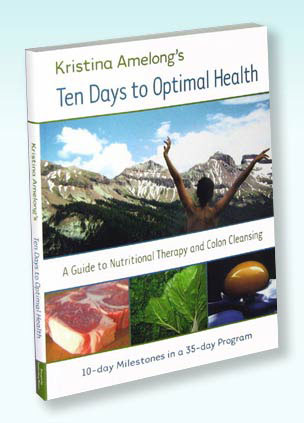
For comprehensive coverage of the coffee enema, see Chapter 3 of Sherry Roger's book "Wellness Against All Odds" (starting with "The Coffee Break") and Chapters 8 and 9 of Kristina Amelong's book, Ten Days to Optimal Health.
You cannot get the same benefits from coffee by drinking it. To the contrary, Nicholas Gonzalez, M.D., a leading alternative cancer doctor, claims that drinking coffee stifles liver function.
After doing a coffee enema, I have sometimes found that my emptied gallbladder refills with toxin-dense bile. Then as soon as I eat any fat-containing food (plant or animal), this toxic bile is released in the absence of a binding agent and I feel toxic again. To deal with this, I take 1/3 to 1/2 handful of chlorophyll to bind with toxins, about 30 minutes prior to a post-coffee enema meal or snack.
What Does a Coffee Enema Do?
A properly performed coffee enema greatly facilitates the release of toxins by:
- stimulating the liver, a main organ of detoxification, to produce more bile. Bile is a bodily fluid that has a role in fat digestion and into which many toxins, both internally and externally generated, are dissolved for removal from the body out through the gallbladder, small intestine, and colon.
- causing the muscles of the bile duct to relax, opening the duct widely to produce a large flow of bile from the gallbladder into the small intestine (where you should have a binding agent present — chlorophyll — to tightly bind the toxins to prevent reabsorption). This allows the liver to rid itself of many toxins quickly, freeing it to process more blood-transported toxins from throughout the body. A systemic detoxification effect and greater overall well-being results. All the blood in your body passes through the liver about every three minutes.
- dilating blood vessels via effects of the coffee's theophylline and theobromine, further increasing blood flow to the liver.
- increasing glutathione s-transferase (GST) production, a key detoxification enzyme, by 600 to 700%, via action of coffee's palmitic acid. GST shuttles toxins for binding with glutathione, which neutralizes them and carries them out of the body in the bile.
- speeding transit of waste through the colon.
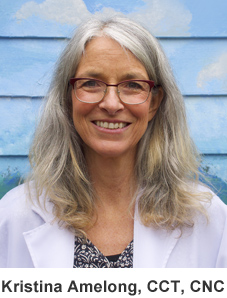
▶︎ Need more detailed guidance in creating a home health program that's right for you?
Personal Health Consultations with
Kristina Amelong, CCT, CNC
For personalized support with your home health program, I would be happy to assist via a scheduled phone consultation. I charge an affordable $2.25 per minute, for as many or as few minutes as you need!
First complete any relevant sections of my secure online intake form. Upon submitting the form, you will be prompted to schedule a consultation time with me via my online booking system.
If you are an international client who would like to use WhatsApp for your scheduled consultation, please email us for instructions on how to contact me at the time of your consultation.